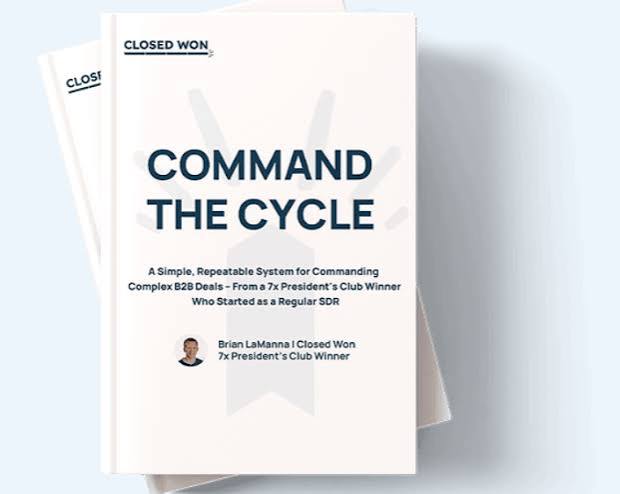
Brian LaManna – Command The Cycle
$147.00 Original price was: $147.00.$25.00Current price is: $25.00.

Brian LaManna – Command The Cycle: The Ultimate Guide to Mastering Growth, Performance, and Lasting Success
Introduction
Success is rarely the result of luck. Behind every achievement lies a pattern of actions, decisions, habits, and mindset shifts that create consistent progress over time. In Brian LaManna – Command The Cycle, readers are introduced to a transformative approach that helps individuals recognize, understand, and take control of the recurring patterns that shape their personal and professional lives.
The concept of commanding the cycle is built on the understanding that life operates through continuous loops. Whether it is personal development, leadership, productivity, business growth, fitness, relationships, or financial success, every outcome stems from a cycle of behaviors and decisions. Those who learn to identify and optimize these cycles gain a significant advantage in achieving their goals.
This guide explores the philosophy, principles, and practical applications behind Brian LaManna’s approach, offering valuable insights for anyone seeking sustainable success and long-term fulfillment.
Understanding the Concept of Command The Cycle
At its foundation, Command The Cycle emphasizes the idea that every result is connected to a repeated sequence of actions. Many people focus only on outcomes while ignoring the systems that produce those outcomes.
When individuals fail to achieve their desired results, they often blame external circumstances. However, true transformation begins by examining the cycle itself. Every habit, decision, reaction, and behavior contributes to a recurring pattern that either moves a person closer to success or further away from it.
By learning to command these patterns rather than being controlled by them, individuals can create intentional pathways toward growth and achievement.
The Power of Awareness
One of the central themes in Brian LaManna’s philosophy is awareness.
Awareness serves as the starting point for meaningful change. Before anyone can improve a process, they must first understand how it operates. Many limiting behaviors continue because people are unaware of the triggers and routines that sustain them.
Developing self-awareness allows individuals to:
- Identify unproductive habits
- Recognize emotional triggers
- Understand recurring challenges
- Evaluate decision-making patterns
- Gain clarity on personal goals
Awareness transforms unconscious behaviors into conscious choices, creating opportunities for improvement and growth.
Breaking Negative Cycles
Many individuals become trapped in cycles that hinder progress. These patterns may appear in various forms, including procrastination, self-doubt, inconsistency, fear of failure, or lack of discipline.
Negative cycles often follow a predictable structure:
Trigger
An event, situation, or emotion initiates a response.
Reaction
The individual responds based on existing habits or beliefs.
Outcome
The reaction produces a result that reinforces the original pattern.
Reinforcement
The cycle repeats, becoming stronger over time.
Breaking these cycles requires intentional intervention. Instead of reacting automatically, individuals must pause, evaluate their options, and choose a more productive response.
Over time, consistent positive actions replace old behaviors and establish healthier patterns.
Building High-Performance Habits
Success is not created through occasional effort. It emerges from consistent habits performed over extended periods.
A major lesson within the Command The Cycle framework involves the development of high-performance habits that support long-term goals.
Effective habits share several characteristics:
- Consistency
- Simplicity
- Measurability
- Alignment with objectives
- Long-term sustainability
Rather than relying solely on motivation, successful individuals create systems that make productive behaviors automatic.
Small daily improvements may seem insignificant initially, but their cumulative effect can be extraordinary. Consistent action compounds over time, producing remarkable results.
Leadership Through Intentional Action
Leadership is another critical area addressed within the Command The Cycle philosophy.
Strong leaders understand that their actions create organizational and cultural cycles. Every decision influences team behavior, communication, accountability, and performance.
Effective leadership involves:
Creating Clear Expectations
Teams perform better when expectations are clearly defined and consistently reinforced.
Modeling Desired Behaviors
Leaders establish standards through their own actions rather than relying solely on instructions.
Encouraging Accountability
Accountability ensures that positive behaviors become embedded within organizational culture.
Supporting Continuous Improvement
Organizations that embrace learning and adaptation remain competitive and resilient.
By intentionally shaping these cycles, leaders create environments where individuals and teams can thrive.
Developing Mental Resilience
Challenges and setbacks are unavoidable aspects of life.
Mental resilience determines how effectively individuals respond to adversity and continue moving forward despite obstacles.
The Command The Cycle approach encourages individuals to view setbacks as feedback rather than failure. Every challenge presents an opportunity to learn, adapt, and improve.
Key components of resilience include:
Emotional Control
Managing emotions during difficult situations prevents impulsive decision-making.
Adaptability
The ability to adjust strategies in response to changing circumstances supports long-term success.
Persistence
Consistent effort despite setbacks separates achievers from those who abandon their goals.
Growth Mindset
Viewing challenges as opportunities for development promotes continuous improvement.
Resilient individuals understand that progress is rarely linear and remain committed to the process regardless of temporary setbacks.
The Role of Discipline in Sustainable Success
Discipline is often misunderstood as restriction or punishment. In reality, discipline serves as the bridge between goals and accomplishment.
While motivation fluctuates, discipline provides stability.
Within the Command The Cycle framework, discipline enables individuals to:
- Maintain focus
- Execute plans consistently
- Overcome distractions
- Develop productive routines
- Achieve long-term objectives
Success becomes predictable when disciplined actions are repeated consistently over time.
The most successful individuals are not necessarily the most talented. They are often the most disciplined in executing their systems and routines.
Creating Positive Momentum
Momentum plays a crucial role in personal and professional growth.
Positive momentum occurs when productive actions generate encouraging results, leading to increased confidence and continued effort.
This process creates an upward cycle where:
- Action produces progress.
- Progress builds confidence.
- Confidence encourages further action.
- Additional action generates greater progress.
As momentum increases, achieving goals becomes more manageable because productive behaviors become deeply ingrained.
The key is taking action even when results are not immediately visible.
Decision-Making and Personal Responsibility
Every cycle is influenced by decisions.
Individuals who take ownership of their choices gain greater control over their future outcomes.
Personal responsibility involves:
- Accepting accountability
- Learning from mistakes
- Making intentional choices
- Focusing on controllable factors
- Pursuing continuous improvement
Rather than blaming circumstances, successful individuals evaluate their responses and seek opportunities for growth.
This mindset creates empowerment and strengthens long-term effectiveness.
Applying Command The Cycle in Business
Business success depends heavily on systems and repeatable processes.
Organizations that consistently achieve strong results understand how to identify, optimize, and scale effective cycles.
Key business applications include:
Sales Performance
Understanding customer behavior and refining sales processes improves conversion rates and revenue growth.
Team Development
Creating structured training and accountability systems enhances employee performance.
Customer Experience
Positive customer interactions generate loyalty, referrals, and long-term business growth.
Operational Efficiency
Streamlined processes reduce waste and improve productivity.
Organizations that command their operational cycles position themselves for sustainable expansion and competitive advantage.
Personal Growth and Continuous Improvement
Personal development is an ongoing journey rather than a destination.
The Command The Cycle philosophy encourages continuous self-assessment and refinement.
Areas for personal growth include:
- Communication skills
- Emotional intelligence
- Time management
- Goal setting
- Leadership development
- Health and wellness
- Financial management
Regular reflection helps individuals identify strengths, weaknesses, and opportunities for improvement.
This commitment to growth creates a cycle of learning, adaptation, and advancement.
Mastering Time and Productivity
Time is one of the most valuable resources available.
Individuals who effectively manage their time can accomplish more while reducing stress and maintaining balance.
Strategies include:
Prioritization
Focus on activities that generate the greatest impact.
Planning
Develop structured schedules that align with goals.
Elimination
Remove unnecessary distractions and low-value activities.
Consistency
Follow established routines that support productivity.
By optimizing daily behaviors, individuals gain greater control over their results and overall effectiveness.
The Importance of Long-Term Thinking
One of the most powerful lessons associated with Command The Cycle is the value of long-term thinking.
Many people sacrifice future success for immediate gratification. However, meaningful achievement requires patience, persistence, and strategic planning.
Long-term thinkers:
- Focus on sustainable progress
- Make decisions based on future outcomes
- Invest in continuous learning
- Build strong habits
- Remain committed during difficult periods
This perspective helps individuals stay aligned with their goals even when short-term results are limited.
Why Commanding the Cycle Matters
The difference between success and stagnation often comes down to understanding and controlling recurring patterns.
Those who command their cycles can:
- Improve performance
- Strengthen leadership abilities
- Build resilience
- Increase productivity
- Achieve personal goals
- Enhance business outcomes
- Create lasting positive change
Rather than reacting to circumstances, they actively shape the systems that influence their lives.
This proactive approach leads to greater consistency, confidence, and achievement.
Conclusion
Brian LaManna – Command The Cycle presents a powerful framework for understanding how habits, decisions, mindset, and behavior create the outcomes we experience every day. By identifying recurring patterns and intentionally shaping them, individuals gain the ability to drive meaningful transformation in every area of life.
Whether applied to leadership, business, personal development, productivity, or resilience, the principles behind commanding the cycle provide a practical roadmap for sustainable success. The journey begins with awareness, continues through disciplined action, and ultimately leads to lasting growth.
Those who learn to command the cycle no longer leave success to chance. They create systems that consistently produce the results they desire, empowering themselves to achieve higher levels of performance, fulfillment, and long-term excellence.